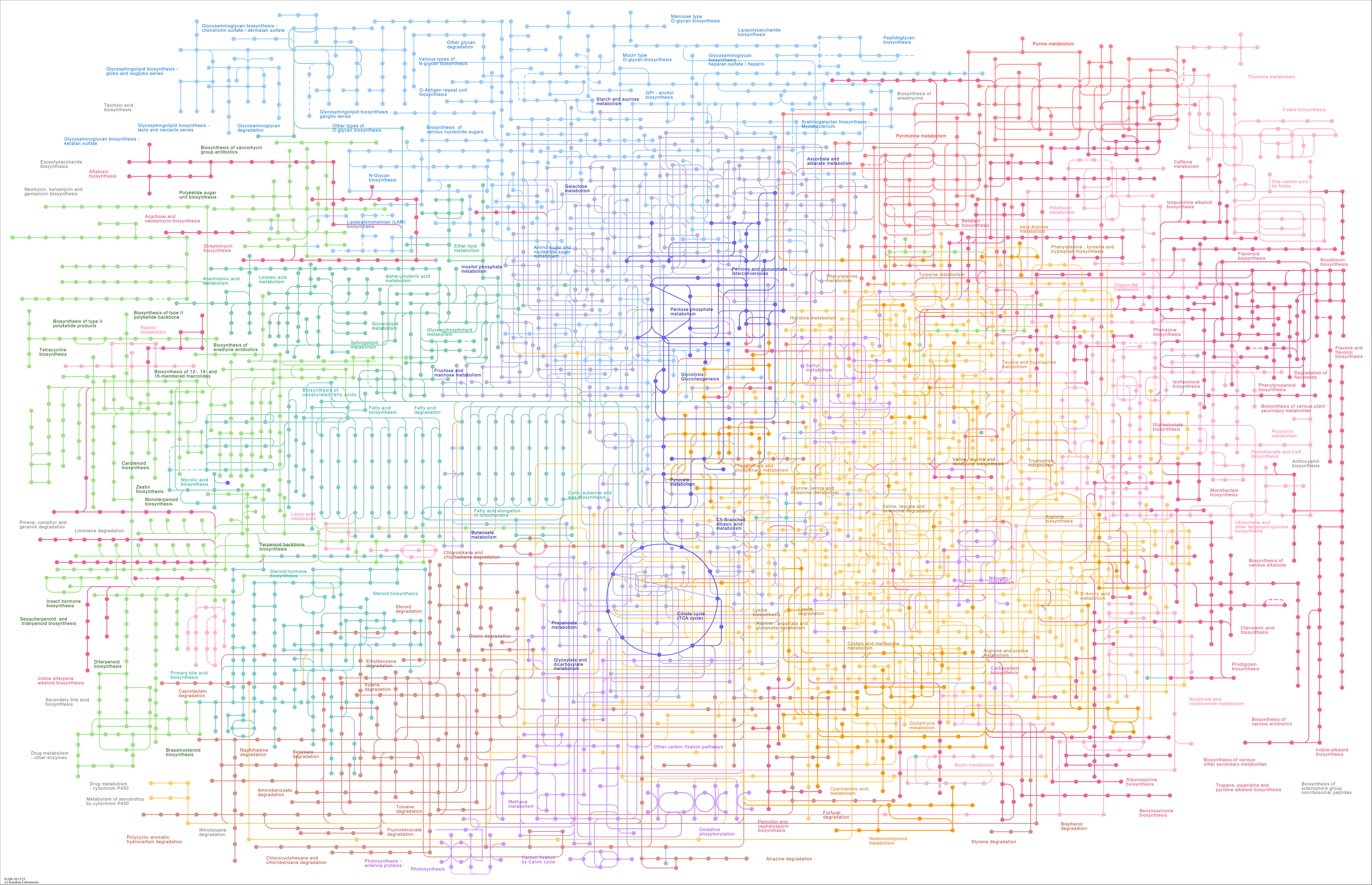
 Zoom image
Your body: a city that never sleeps
A map to speed up diagnosis of rare metabolic diseases
In around 1 in every 800 infants, a blockage in a single metabolic reaction causes a serious metabolic disorder. To speed up diagnosis, the most comprehensive map of human metabolism to date has been produced as part of the Recon4IMD project. In this race against disease, it enables researchers to identify more quickly where the system is malfunctioning, so that patient care can be tailored as effectively as possible.
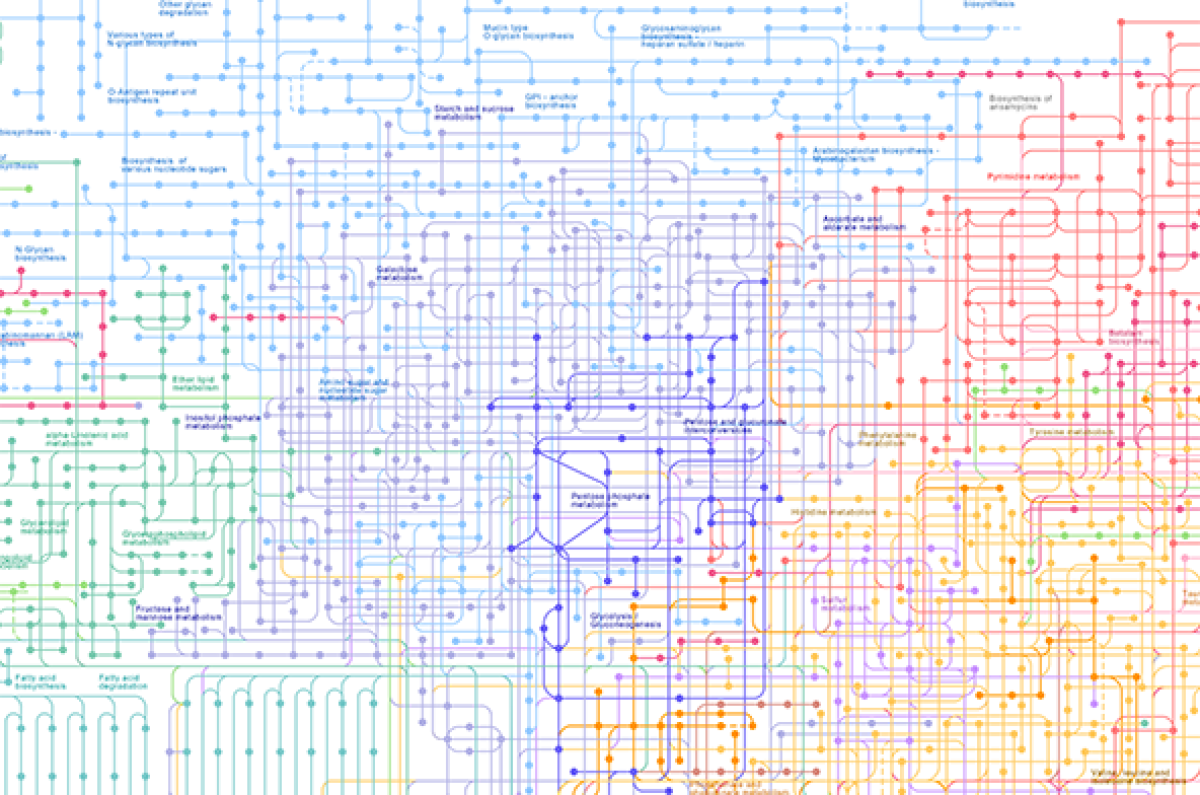
The colours represent the main functions of metabolism: producing energy, breaking down sugars, and creating fats or protein components.
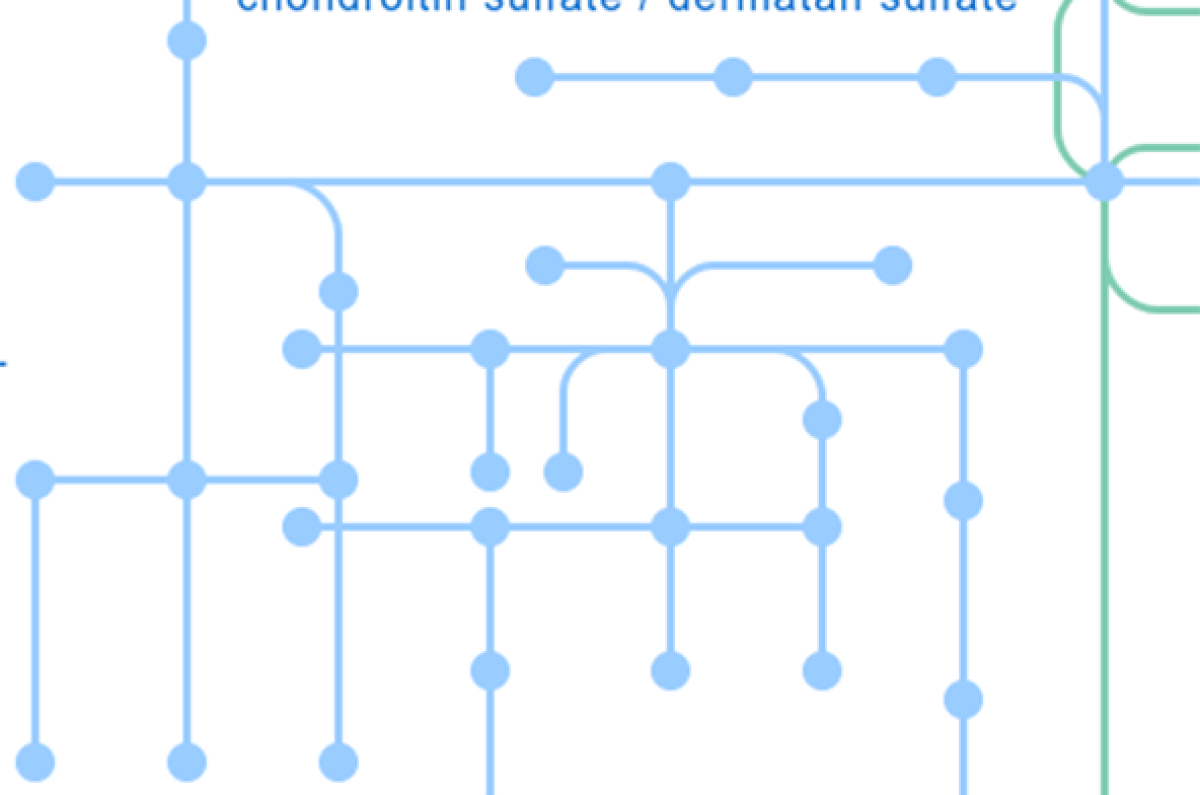
Each line represents a chemical reaction that is essential to the functioning of our cells.
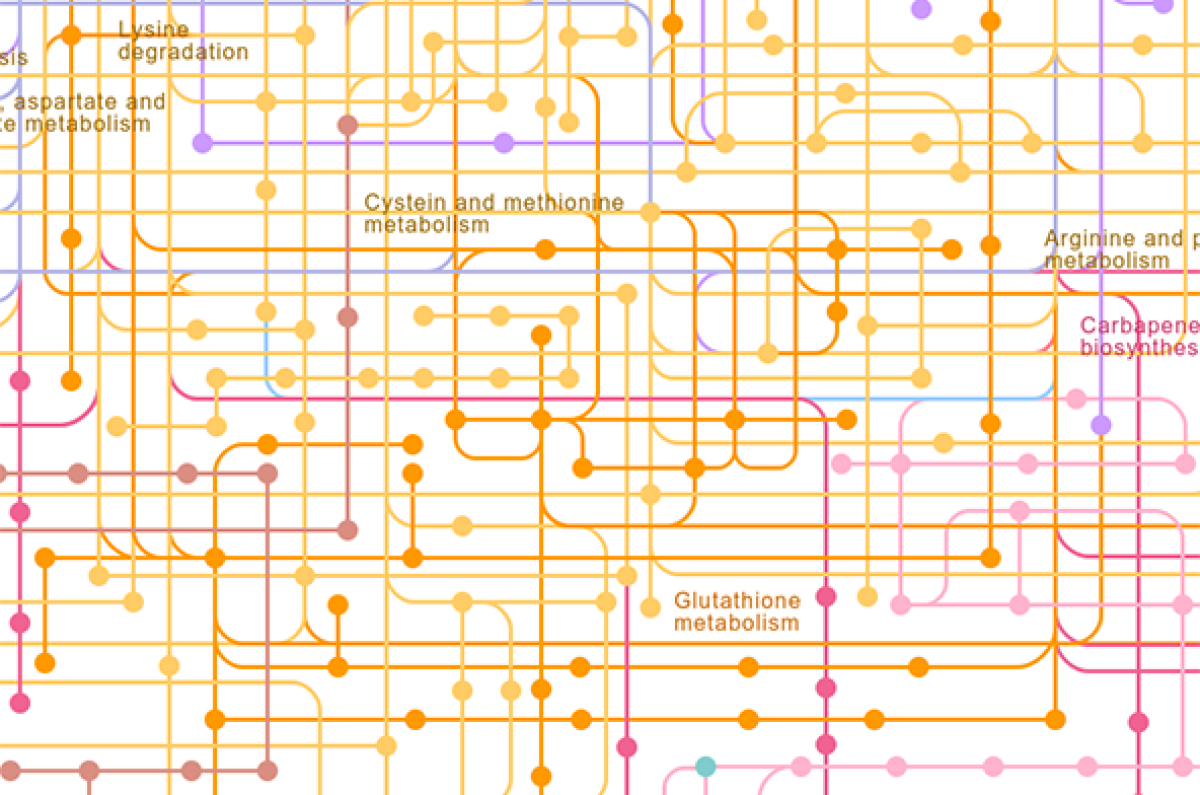
A single blocked reaction can disrupt the entire pathway – much like a fault on a railway line – and cause one of the 1,400 known inherited metabolic disorders.
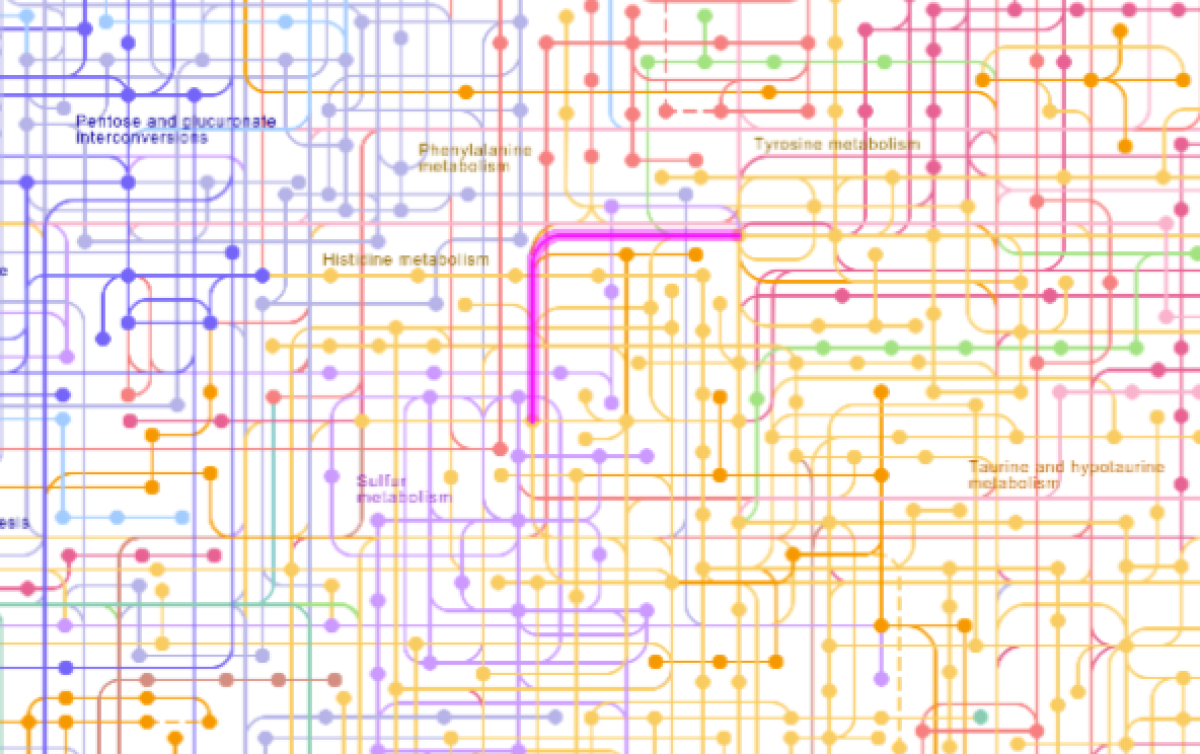
For example: in people with phenylketonuria, the breakdown of a molecule called phenylalanine is blocked precisely at this pink line, leading to its toxic build-up in the body.