A 3D survey to guide treatment
Modelling for better care
When standard treatments fail, bioinformatics opens up new avenues. It enables us to model the impact of mutations specific to each patient and to predict their effects on the progression of the cancer or on responses to other treatments. These findings, discussed at the molecular tumour board by doctors and geneticists, help in selecting the best treatment options.
DNA contains the instructions for making the proteins that make our cells function. When a mutation occurs in the DNA, the structure and activity of the protein can change and contribute to triggering cancer.
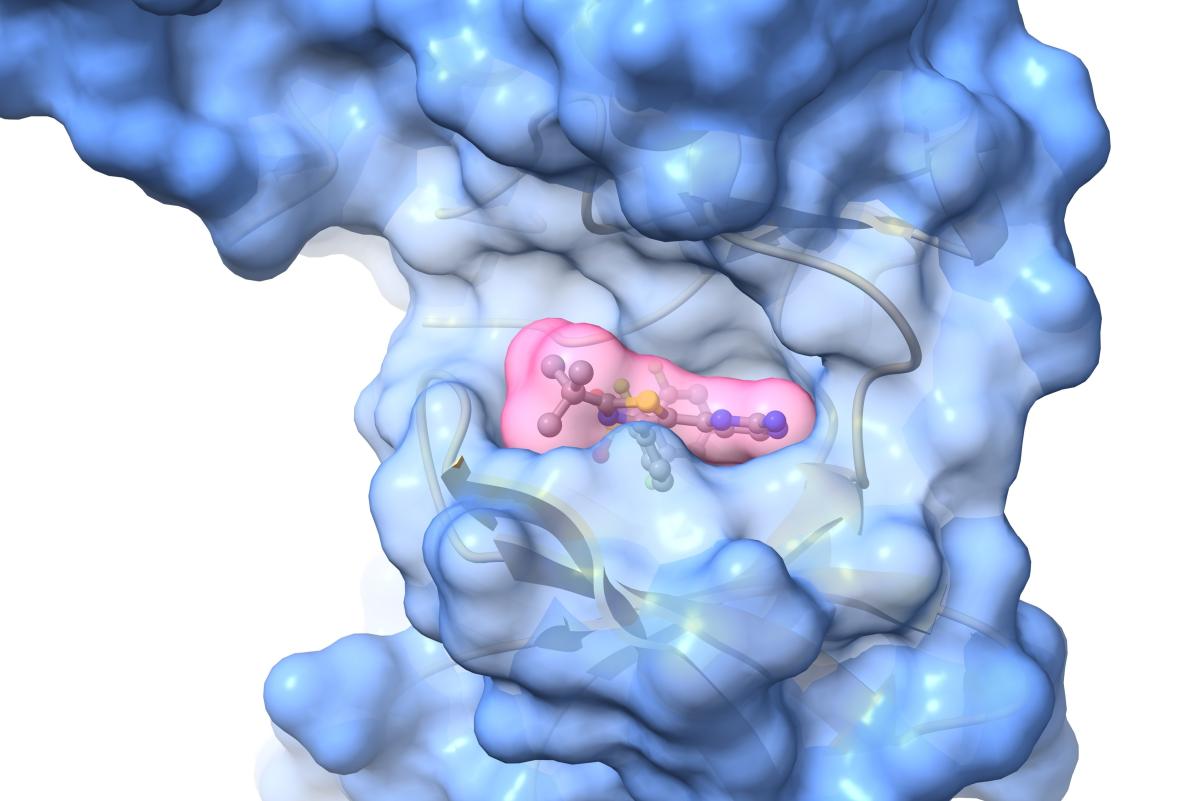
Molecular computer modelling is used to determine whether a drug can be inserted into a mutated protein to block its abnormal activity.
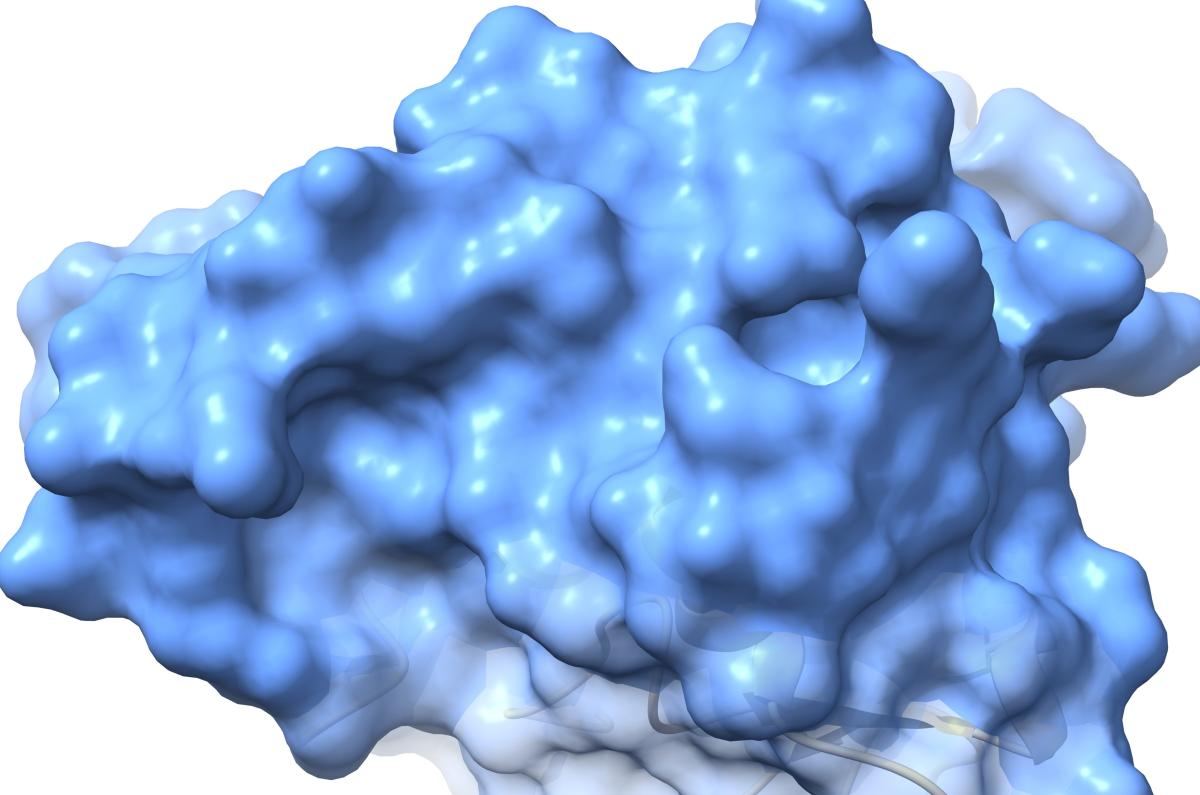
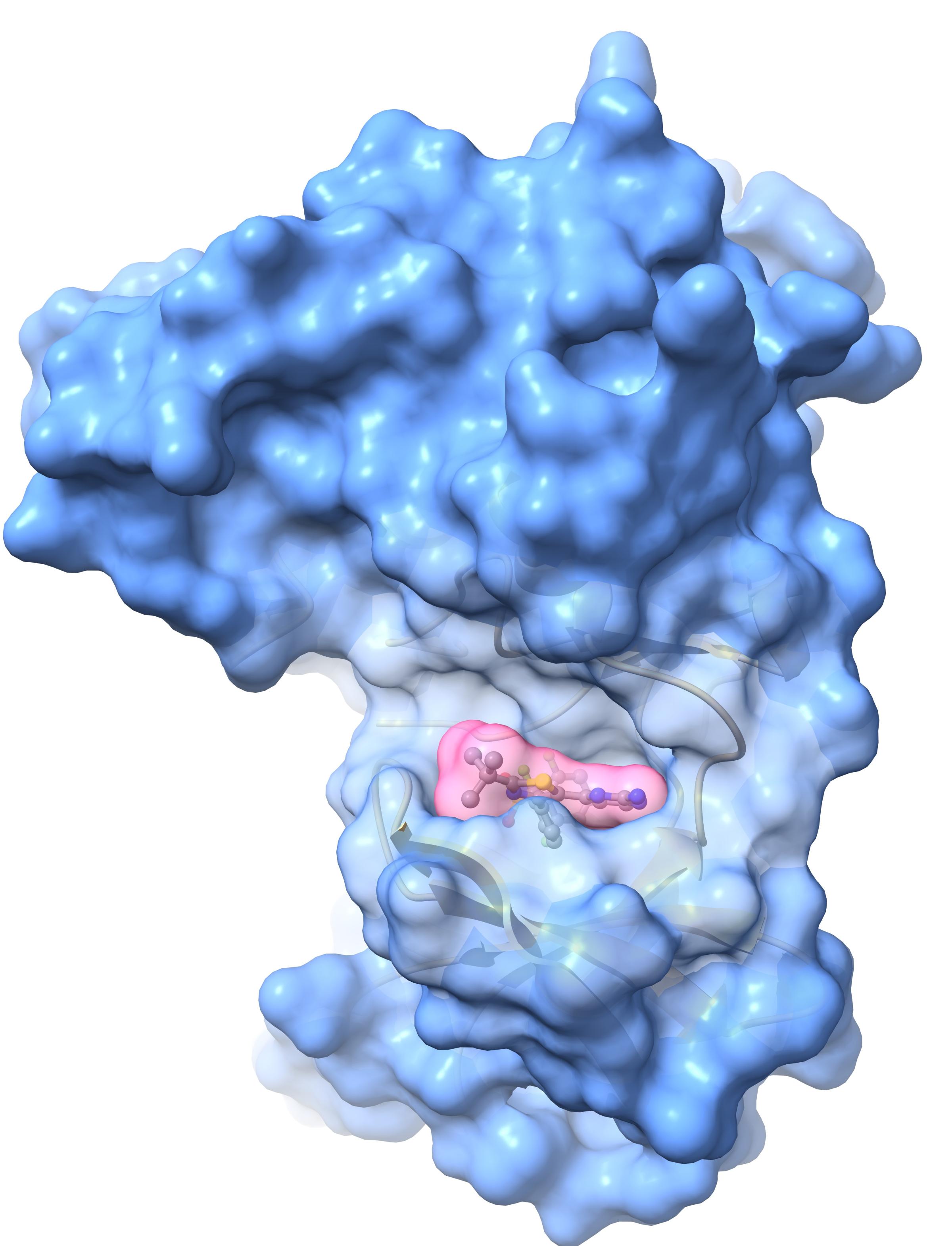
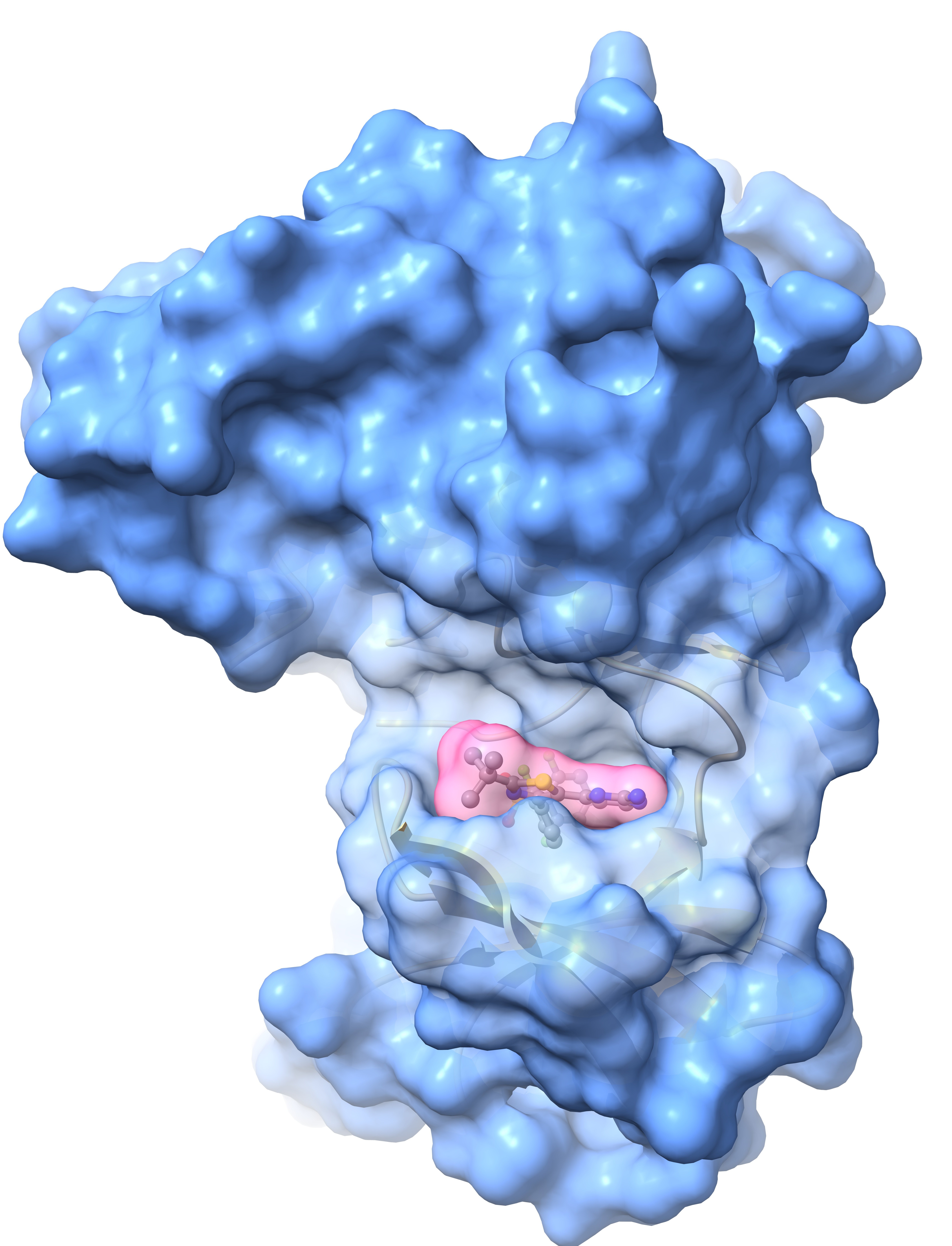
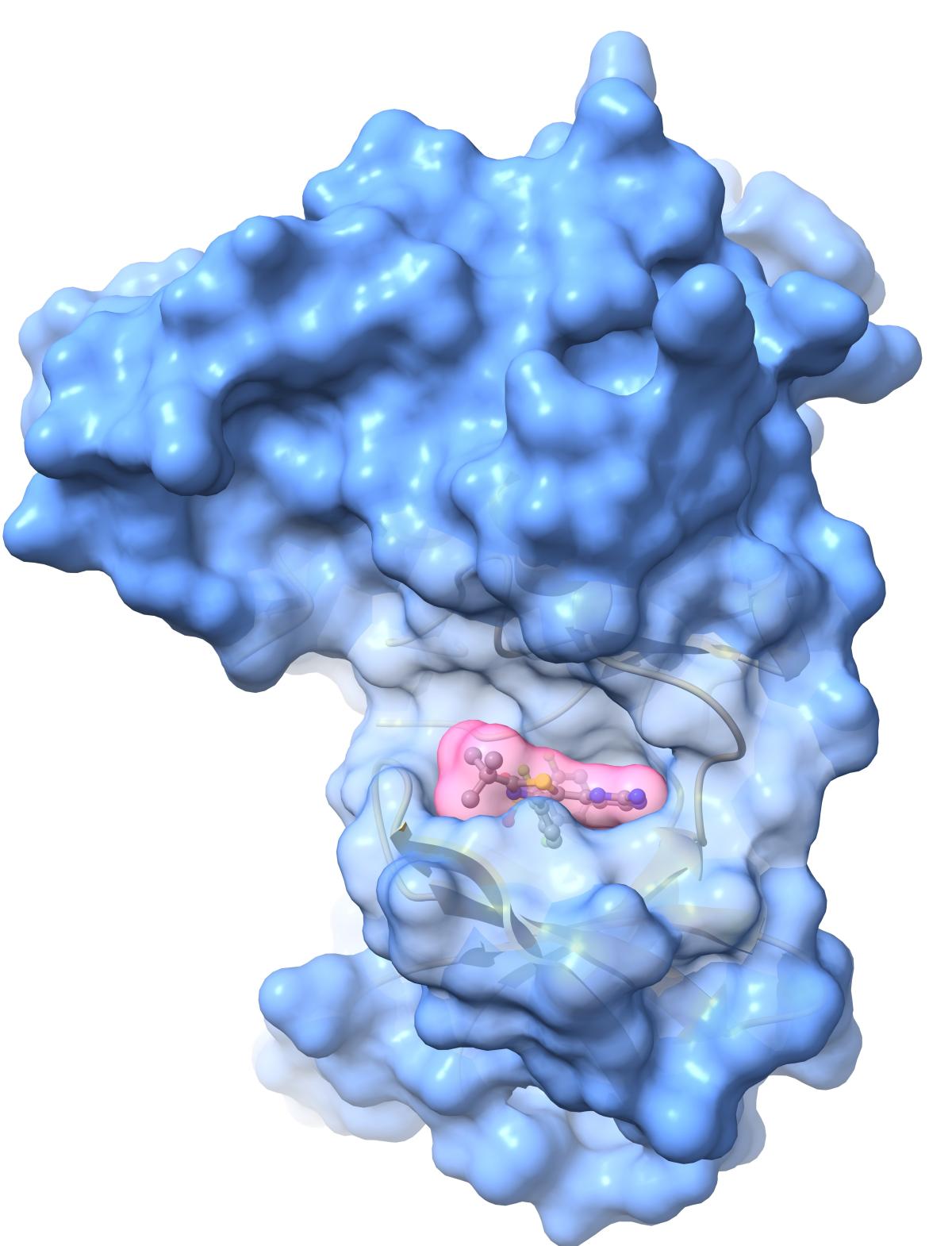
Here, in blue, a mutated and over-activated protein (BRAF) at the origin of certain skin cancers (melanoma).
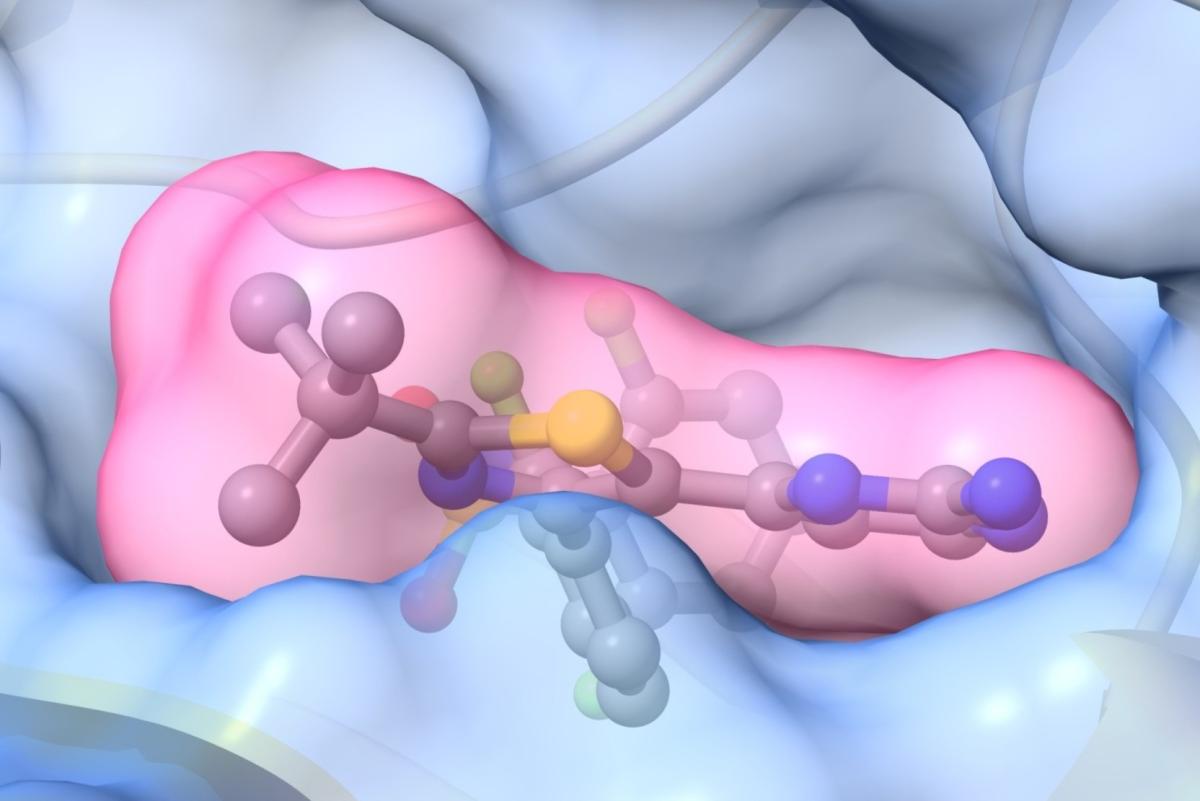
In the centre, circled in pink (and depicted as ‘balls and sticks’): the drug being tested (Dabrafenib) fits into the mutated protein like a key in a lock, and blocks its abnormal activity.